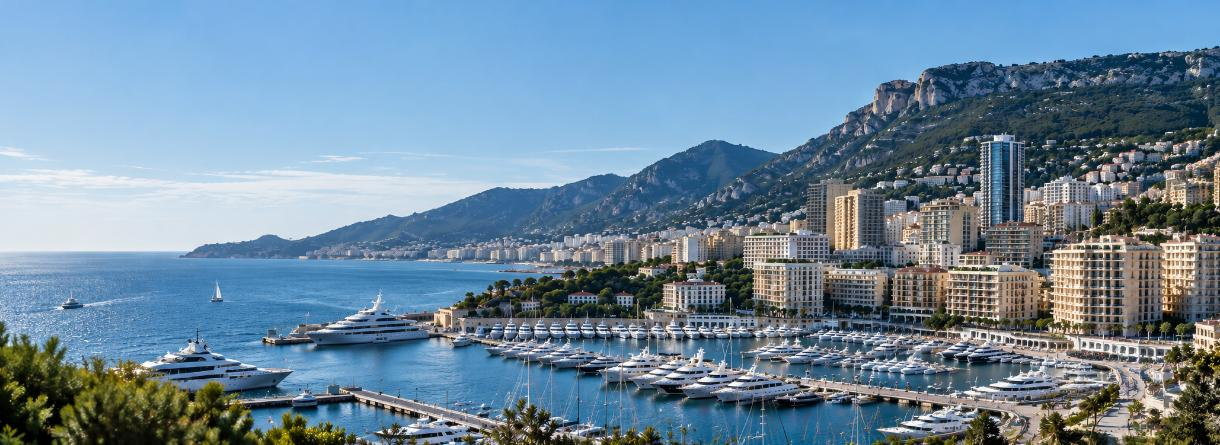
Monaco developments in 2026
Monaco enters the latter part of 2026 at an interesting point in its evolution as an international private wealth centre. The Principality continues to attract new residents from across the world while simultaneously emerging from one of the most intensive periods of regulatory reform in its recent history.
These developments are increasingly interconnected. International families considering Monaco are looking not simply at taxation, but at political and fiscal stability, security, education, quality of life and the depth of the professional infrastructure available to support increasingly complex cross-border lives.
The FATF process: approaching an important milestone
Monaco was placed under FATF increased monitoring, commonly known as the “grey list”, in June 2024. Since then, the pace of reform has been considerable.
At its June 2026 Plenary, FATF concluded that Monaco had substantially completed its action plan and warranted an on-site assessment to verify that the reforms had been implemented and were sustainable. This represents an important milestone, although formal removal from increased monitoring requires completion of the FATF process. An FATF on-site visit is expected in September, when assessors will examine whether the reforms are embedded in practice and capable of being sustained. Subject to a successful assessment, Monaco's position should then be considered at the FATF Plenary scheduled for 26–30 October 2026, potentially paving the way for removal from increased monitoring. FATF has already determined that Monaco has substantially completed its action plan.
Eventual removal from the grey list would be an important reputational milestone for the Principality. Rather than simply restoring Monaco's previous position, it should reinforce its international standing by demonstrating that the substantial regulatory, supervisory and judicial reforms of the past two years have been recognised by FATF as effective and sustainable. For an international private wealth centre, that stronger regulatory credibility should further enhance Monaco's attractiveness to families, financial institutions and professional advisers.
The more lasting consequence is the transformation of Monaco's compliance environment. Expectations surrounding customer due diligence, beneficial ownership, source of wealth, suspicious transaction reporting and the responsibilities of regulated professionals have all increased substantially.
The development of professional expertise is following this regulatory change. The International University of Monaco (IUM), in partnership with the Association Monégasque des Compliance Officers (AMCO), has introduced a specialist AML/CFT professional certification programme aimed particularly at Monaco's non-banking and non-financial sectors. It is a good example of Monaco developing the human expertise required to accompany its strengthened regulatory framework.
More than a UK non-dom story
Much was predicted about an exodus of wealthy UK residents following the abolition of the UK's non-domicile regime. Monaco has undoubtedly benefited, although the number of former UK non-doms actually relocating may so far be less dramatic than some of the early predictions suggested.
The underlying British trend is nevertheless significant. British nationals now represent 7.9% of Monaco's population, while UK nationals accounted for 18.9% of adult residents who arrived between 2023 and 2025 and remained resident at the end of 2025. They are the fourth-largest nationality, behind Monégasques (24.0%), French (21.3%) and Italians (19.5%).
That is a fairly significant increase in one year: +163 British residents, or roughly +5.6%, compared with overall Monaco population growth of just 1.1%. So the British community is clearly growing faster than the resident population as a whole. Our experience is that they are not only non-doms leaving the UK. Many are UK doms.
But concentrating too heavily on British arrivals risks missing the more interesting story.
Monaco's official population reached 38,857 in 2025, an increase of 1.1% in a year, and the Principality is now home to 144 nationalities. Recent years have seen growth not only in the British community but among a broad range of European and international nationalities.
Italians, Germans, Americans, Canadians, Ukrainians and Swiss residents also increased. By contrast, the French population declined slightly.
Our own experience is consistent with this broader picture. Interest in Monaco continues to come from a wide variety of countries and backgrounds rather than from any single source market.
Geopolitics is also playing a role. The conflicts and uncertainty affecting the Middle East have prompted some internationally mobile families who might previously have considered the UAE to look again at European alternatives. Market evidence suggests that some prospective residents who had been contemplating the Middle East are instead considering European wealth centres, including Monaco.
This reinforces one of Monaco's longstanding attractions: it is perceived not simply as a favourable tax jurisdiction, but as a particularly stable and secure European base.
Education is becoming part of Monaco's attraction
Another, sometimes overlooked, development is Monaco's rapidly expanding international education sector.
For internationally mobile families, the availability of high-quality English-language and international education can be decisive when choosing where to establish a genuine family residence.
The International School of Monaco (ISM) now has more than 850 pupils representing over 60 nationalities, following its move in 2024 to a major purpose-built campus at Testimonio II in Larvotto.
The British School of Monaco, established only in 2022 with seven pupils, has expanded remarkably quickly. It begins the 2026 academic year with approximately 170 pupils and 70 staff and has introduced Year 10 and Monaco's first IGCSE programme.
The trend is visible across the sector: Monaco's private-school population has grown materially over the past decade, driven in particular by international education.
At higher-education level, IUM is itself increasingly international. Its student body encompasses more than 80 nationalities, while its growing executive-education offering in areas such as wealth management and compliance creates an increasingly close relationship between education and Monaco's professional community.
Taken together, these developments make Monaco more viable as a permanent family base rather than simply a residence for an individual wealth creator.
Relocation is the beginning, not the end
One recurring misconception is that obtaining Monaco residence completes the planning exercise.
In reality, it should trigger a much wider review.
A new resident may have companies in several jurisdictions, existing trusts, investment portfolios, real estate, yachts, private aircraft and family members resident elsewhere. Changing residence can affect the tax and succession treatment of those assets without altering their legal ownership.
Estate planning is particularly important.
Individuals should review their wills, applicable succession law, matrimonial regime, lifetime gifting strategy and existing trust or foundation arrangements. The residence and nationality of spouses, children and other beneficiaries may be just as important as those of the individual moving to Monaco.
For British families, the UK's move towards a residence-based inheritance tax system makes pre-departure and post-arrival planning particularly important. But the same principle applies to the many other nationalities now choosing Monaco: becoming Monaco resident does not remove tax, succession or reporting obligations arising elsewhere.
Monaco's next phase: modernising the legal environment
The past few years have understandably been dominated by MONEYVAL, FATF and the strengthening of Monaco's AML framework. The next phase looks broader, with an active Conseil National and the Princely Government pursuing a number of initiatives that could materially modernise the legal environment for Monaco residents and reinforce the Principality's competitiveness as an international private wealth centre.
Of particular interest is a Proposition, adopted by the Conseil National in June 2025, which proposes the creation of a Fondation Patrimoniale Monégasque. This would provide Monaco with its own private wealth foundation: a Monaco legal entity capable of holding assets including real estate, company shares and intangible rights and administering them principally for the benefit of the founder's family. The Conseil National expressly presented the initiative as a modern wealth-planning instrument comparable with structures available in competing international financial centres, while maintaining transparency and compliance requirements. Any such structure would need to sit squarely in Monaco’s operational compliance environment.
This sits alongside other potentially important developments for private clients. Proposition de loi n°272, adopted in November 2025, proposes updating Monaco's Code of Private International Law. Given that Monaco is home to almost 140 nationalities, rules determining applicable law and jurisdiction in international family, succession and other private-law matters are particularly important. The proposed reform is expressly intended to improve the coherence and effectiveness of the Code following eight years of practical experience.
Family law is also evolving. A Proposition de loi proposes significant reform of divorce and separation, including a simplified objective basis for divorce and, importantly for internationally wealthy families, formal recognition of nuptial agreements enabling couples to determine the financial, property and maintenance consequences of a future marriage breakdown, subject to appropriate judicial safeguards.
The agenda extends to the new economy. The Government’s Projet de loi n°1131, received by the Conseil National in August 2026, proposes a new regulatory framework for crypto-asset service providers. It follows Monaco's earlier legislation on digital assets but demonstrates the continuing effort to develop a credible legal framework around an asset class that is increasingly relevant to entrepreneurs, investors and family wealth structures.
There are other initiatives too. One Proposition de loi would facilitate the transfer to Monaco of the registered office of certain foreign entities while preserving legal continuity, potentially relevant to internationally mobile families with existing holding structures. Taken together with proposals concerning the fiducie, the Fondation Patrimoniale and other reforms, there is a discernible attempt to broaden the range of legal tools available in the Principality.
This legislative activity matters. Monaco competes internationally not simply on taxation, but on the quality and flexibility of its legal system, wealth-planning tools, family-law framework, education, infrastructure and professional services. HNW and UHNW families increasingly compare jurisdictions on the basis of whether they can live there, educate their children, manage businesses and investments, hold new asset classes and plan effectively for succession across several generations.
Monaco therefore appears to be entering an important new phase. Its compliance framework has been substantially strengthened; its resident population is becoming still more international; its education sector is expanding; and its legislature is actively considering reforms designed to modernise the environment in which international families live and manage their wealth, whilst ensuring that any new proposals integrate AML compliance controls from the outset.
For internationally mobile families, Monaco's proposition increasingly extends well beyond favourable taxation. It combines stability, security, international connectivity, education and professional expertise with an evolving legal framework that is increasingly responsive to the requirements of modern international private wealth.
That is potentially a compelling combination for the next generation of Monaco residents.
Rosemont in Monaco follows closely these developments affecting residents, international global families and their businesses.
Contact us if you want to discuss how they might affect you: office@rosemont-mc.com
Follow us on LinkedIn and don't miss our updates about Monaco, Malta, Mauritius, and the yachting industry.